
はじめのひとこと
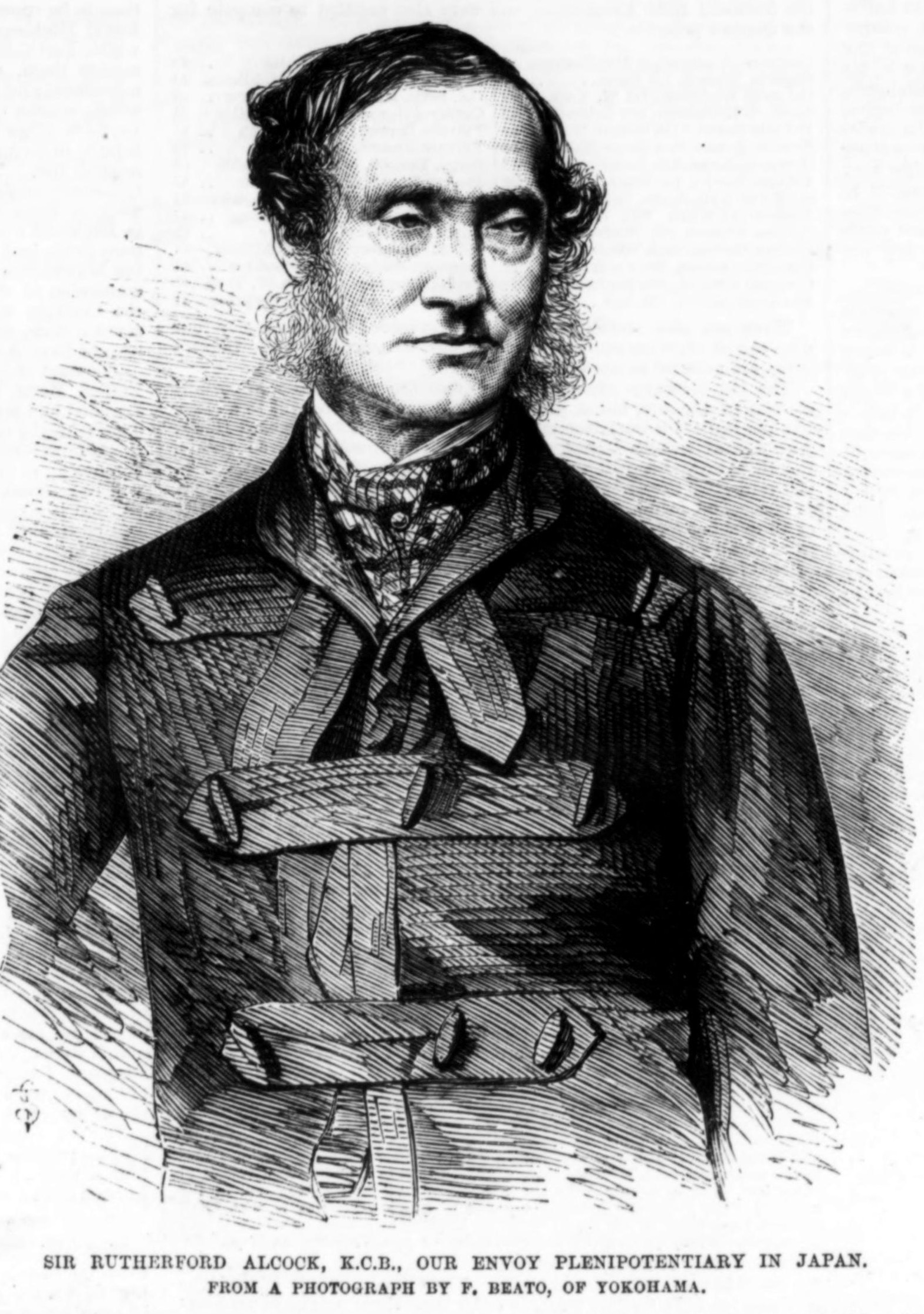
イギリス公使オールコックとオランダ使節団の長デ・ウィットは、並んで Tocaido を旅しました。
オールコックによると、大名行列に道を譲ると、行列はかえって道いっぱいに広がったそうです。
The British Minister Alcock and the head of the Dutch Mission, de Wit, travelled the Tocaido side by side.
According to Alcock, when they gave way to a daimyo's procession, it only spread out to fill the whole road.
De Britse gezant Alcock en het hoofd van de Nederlandse missie, De Wit, reisden zij aan zij over de Tocaido.
Toen zij plaatsmaakten voor de stoet van een daimyo, schreef Alcock, waaierde die juist uit over de hele weg.
四日目に、一行は、オールコックが Tocaido と綴る街道へ入りました。
それからは毎日、大名行列の一つ二つと行き会います。
たいていは何事もなく、睨む者もいましたが、多くは、こちらと同じように黙って行き過ぎました。
ある日、オールコックとデ・ウィットは、護衛をはるか後ろに置いて、並んで馬を進めていました。
角を曲がると、大きな行列が道を埋めています。
二人は道の片側に寄り、一列になりました。
それを見た先頭の役人は、たちまち威張り出し、行列の全体に、道いっぱいに広がるよう合図します。
オールコックの本には、遠慮と礼儀で得たものは、無礼な下役に溝へ突き落とされる危険だけだった、とあります。
彼は、この箇所に脚注を付けました。
先ごろ街道で起きた、薩摩侯の家中、家来たちによる襲撃は、自分たちが道で冒していた危険についての不吉な註釈だ。
事情があまりにもよく似ている、と。
旅の費用にも、二人は並んで立ち向かっています。
二百年前に外国人向けに決められた古い料金があり、オランダ側はそれまで、およそ四千ポンドを請求されていました。
オールコックの記録には、こう記されています。
二人の公使が並んで抵抗した結果、この旅は、英国公使館の三人を含めても、五百ポンドに届かなかった。
On the fourth day they struck into the road Alcock spells "Tocaido."
From then on, each day they met one or two processions of daimyo.
As a rule nothing happened. Some scowled, but most passed on their way, as the two of them did, without a word.
One day, Alcock and de Wit were riding side by side, having left their escort far behind.
As they turned a corner, a large procession was filling the road.
The two drew to one side of the road and went in single file.
No sooner did the leading officer see this than he began to swagger, and signalled the whole train to spread across the entire road.
"All we gained by our consideration and courtesy," Alcock wrote, "was to run the risk of being pushed into the ditch by an insolent subordinate."
He added a footnote to this passage.
The recent attack on the high road by Prince Satsuma's people, he wrote, was "a sinister commentary on the chances we ran on the road."
"The circumstances were so closely parallel."
Over the cost of the journey, too, the two stood side by side.
There was an old tariff for foreigners, set two hundred years before, and the Dutch had until then been charged about four thousand pounds.
Alcock's account puts it as follows.
Because the two envoys resisted together, this journey cost less than five hundred pounds, even with three gentlemen of the British Legation.
Op de vierde dag kwamen ze op de weg die Alcock „Tocaido” spelt.
Vanaf dat moment kwamen ze elke dag een of twee stoeten van daimyo tegen.
Meestal gebeurde er niets. Sommigen keken dreigend, maar de meesten trokken, net als zij, zwijgend voorbij.
Op een dag reden Alcock en De Wit naast elkaar, hun escorte ver achter zich gelaten.
Toen ze een hoek omsloegen, vulde een grote stoet de weg.
De twee gingen aan één kant van de weg staan en reden achter elkaar.
Zodra de voorste ambtenaar dat zag, begon hij te pochen en gaf hij de hele stoet een teken om zich over de hele breedte van de weg te verspreiden.
Alles wat ze met hun terughoudendheid en beleefdheid hadden gewonnen, schreef Alcock, was het gevaar om door een onbeschofte ondergeschikte in de greppel te worden geduwd.
Bij deze passage zette hij een voetnoot.
De recente aanval op de grote weg door de mannen van de vorst van Satsuma, schreef hij, was een onheilspellend commentaar op het gevaar dat zij op de weg hadden gelopen.
De omstandigheden leken er zo sterk op, schreef hij.
Ook tegen de reiskosten stonden de twee samen.
Er gold een oud tarief voor buitenlanders, tweehonderd jaar eerder vastgesteld, en de Nederlanders hadden tot dan toe ongeveer vierduizend pond moeten betalen.
Alcock schrijft het volgende.
Doordat de twee gezanten zich samen verzetten, kostte deze reis minder dan vijfhonderd pond, zelfs met drie heren van het Britse gezantschap erbij.
記録の言葉
この話のもとになった記録の言葉です。ページは、その本に刷られたものです。
Rutherford Alcock『The Capital of the Tycoon』Vol. II(London: Longman, 1863)一次史料
On the fourth day we had struck into the ordinary route, and had the advantage of the fine sanded roads and park-like avenues of the Tocaido. And now each day we met one or more corteges of Daimios coming from the capital. As a general rule we had nothing to complain of ; if some of the principal officers and armed retainers scowled at us … the greater number passed on their way, as we did ours, without any expression of feeling or opinion.
Mr. De Wit and I were riding abreast and without any escort, having left them far behind, when, seeing rather a large cortege filling up the road as we turned an angle, we drew to one side of the road and went in single file.
No sooner did the leading officer observe the movement, than he instantly began to swagger, and motioned all the train to spread themselves over the whole road
so that all we gained by our consideration and courtesy, was to run the risk of being pushed into the ditch by an insolent subordinate.
The late savage and murderous attack on the high road by Prince Satsuma's people, is a sinister commentary on the chances we ran on the road, the circumstances were so closely parallel.
It so happened that the head of the Dutch Mission, Mr. de Wit, whose society could not fail to be a pleasure … had arranged to travel the road on this occasion with me.
antiquated tariffs of expenses established 200 years ago, for the special benefit of the Japanese officials, — by which some 3,000l. of Dutch money must have remained in their hands, after payment of the actual expenses of the journey. About 4,000l. was always charged, and the whole cost in this instance, though we were by no means exempt from extortion, did not amount to 500l. for Mr. de Wit and myself, with three gentlemen attached to the British Legation.